Personal Care

Things you can change in your families personal care routine to contribute to a healthier planet:

  1. Body Products – use all natural/organic products. The chemical content in your body washes, lotions and make-up takes approximately 30 seconds to enter your blood stream once it has been applied. As soon as it washes down the drain, those chemicals and unnatural ingredients are harming the earth. Pro tip: NEVER use products with microbeads, these are micro plastics that are making their way into our bodies of water and being swallowed by fish.

2. Cloth Diapers – They’re not as terrifying as they sound. With my first baby I harboured the desire to go with cloth but I didn’t know how! The best way to learn was to jump right in, which is what I did with baby #2. Cloth diapers come in a variety of shapes and sizes, and tend to last through a lot of wear and tear. We often see women posting gently used cloth diapers on online sale pages because they weren’t the style the family ended up liking best. Every baby and every parent ends up with a favourite style or two, so don’t be afraid to try a few different types of diapers out.

My youngest, rocking cloth

3. Menstrual Cups – If you haven’t tried them yet… I know, they sound terrifying. They do take a little bit of practice, but as we like to say around here, “practice makes progress!” One menstrual cup can last a couple of years and save you hundreds of dollars in other feminine products. They also save the landfill from your chemical laden lady products. (If you’re still worried… click this hyperlink and let my sister Jenna ease your mind)

4. Family Cloth – We utilize a lot of trees in the making of toilet paper… If we can swing it, we should follow in the footsteps of the European bidet users. Rinsing our nether regions with water is more sanitary than toilet paper anyway. Where a wipe down is a necessity, theres family cloth. It’s concept is similar to that of the cloth diaper in that it is a washable and reusable cloth. It is to be left in close proximity to the toilet and used for keeping the family clean. You can make your own stack of family cloth by repurposing materials you already have at home.
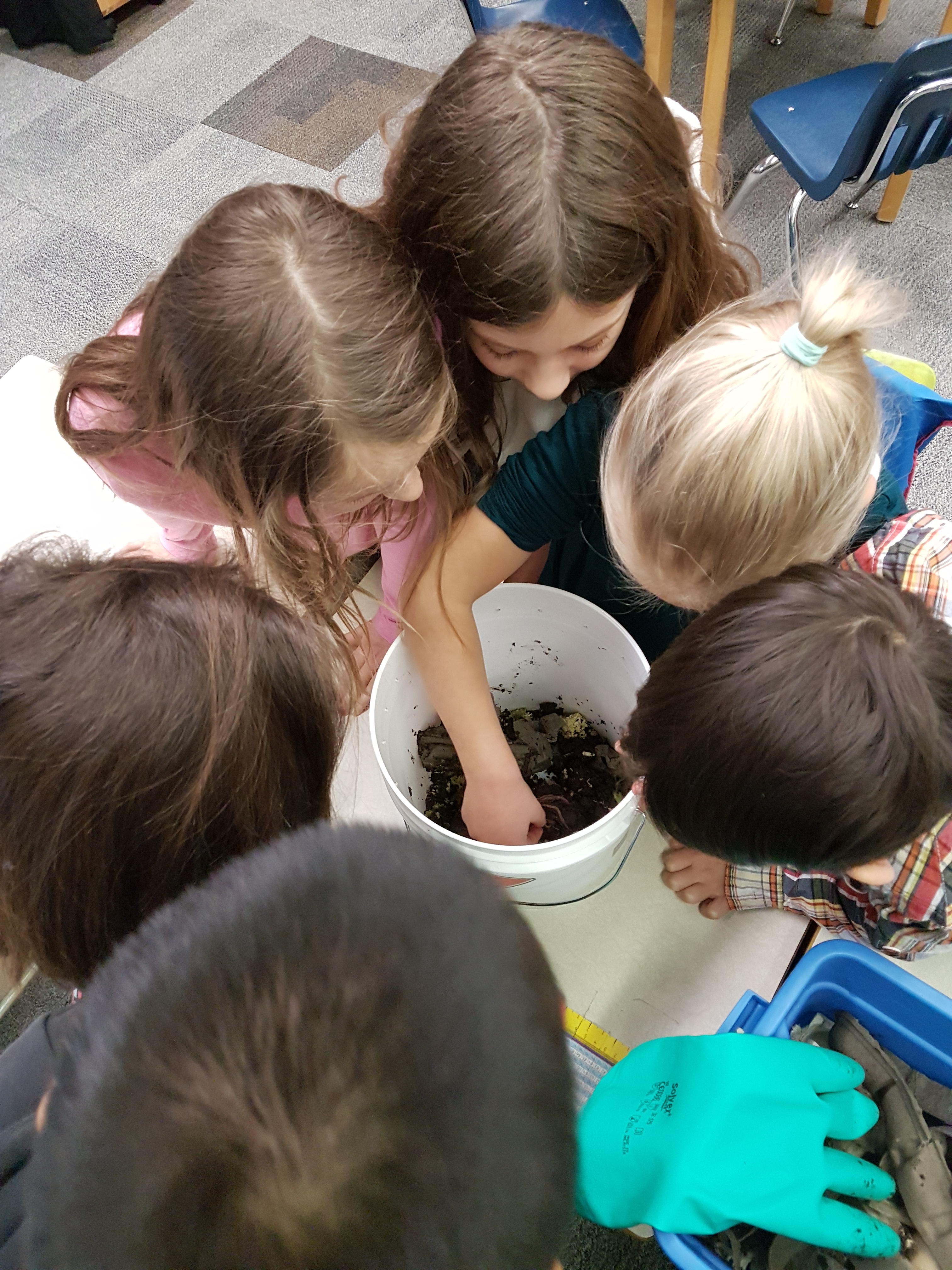
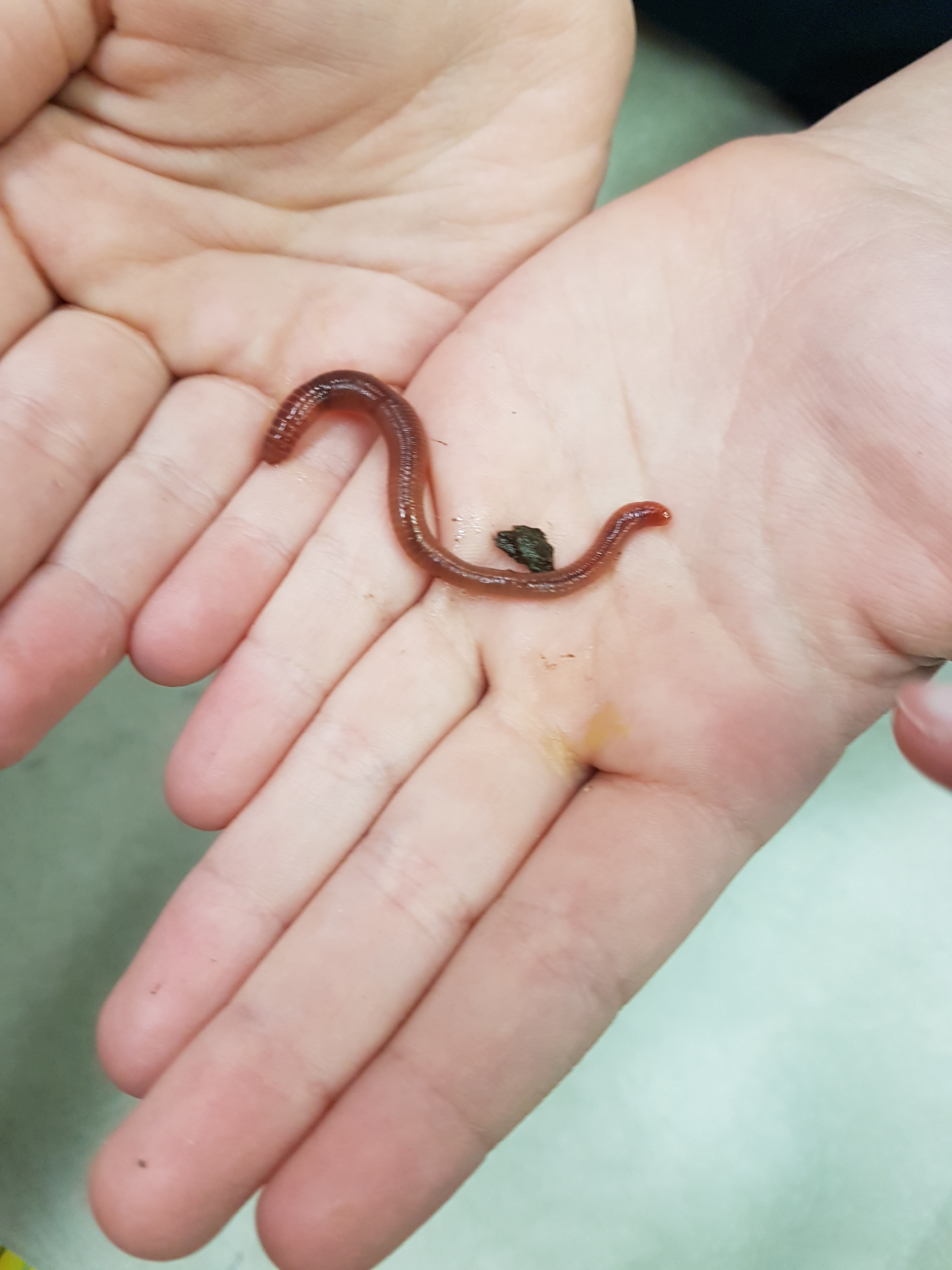
Vermicomposting (WORMS!) With Kids

The most exciting part of this project has been reigniting my desire to vermicompost.. and then sharing it with a very special grade 2 class! (Visit again soon for my tutorial on how to start your own worm farm)

My grade 2 friends have been learning about life cycles lately. The life of the red wriggler, and what it eats and poops are a perfect way to explore an exciting cycle.

My own worm bin hadn’t multiplied enough to take any of our worm family out to start a second farm, so we sourced more worms from a local worm lover who was happy to donate them to us in the name of teaching the next generation of vermicomposters.

Each of the kids in the class helped to set up their new bin by adding natural and moist fibrous materials to the bottom of the bin, then sprinkling in some ground egg shells, and some already established compost.

Everyone got a turn to dig through the worm pile, chose their favourite worm, identify what stage of the worm life cycle it was at, name it, and introduce it to its new home.

Worm day was an exciting one. The energy in the room was high and I had kids asking me all morning if we could take a peak and check on their new friends. Once the bin has some time to become established, the class will be able to identify newly lain eggs and baby worms, and compare the length and size of matured worms.

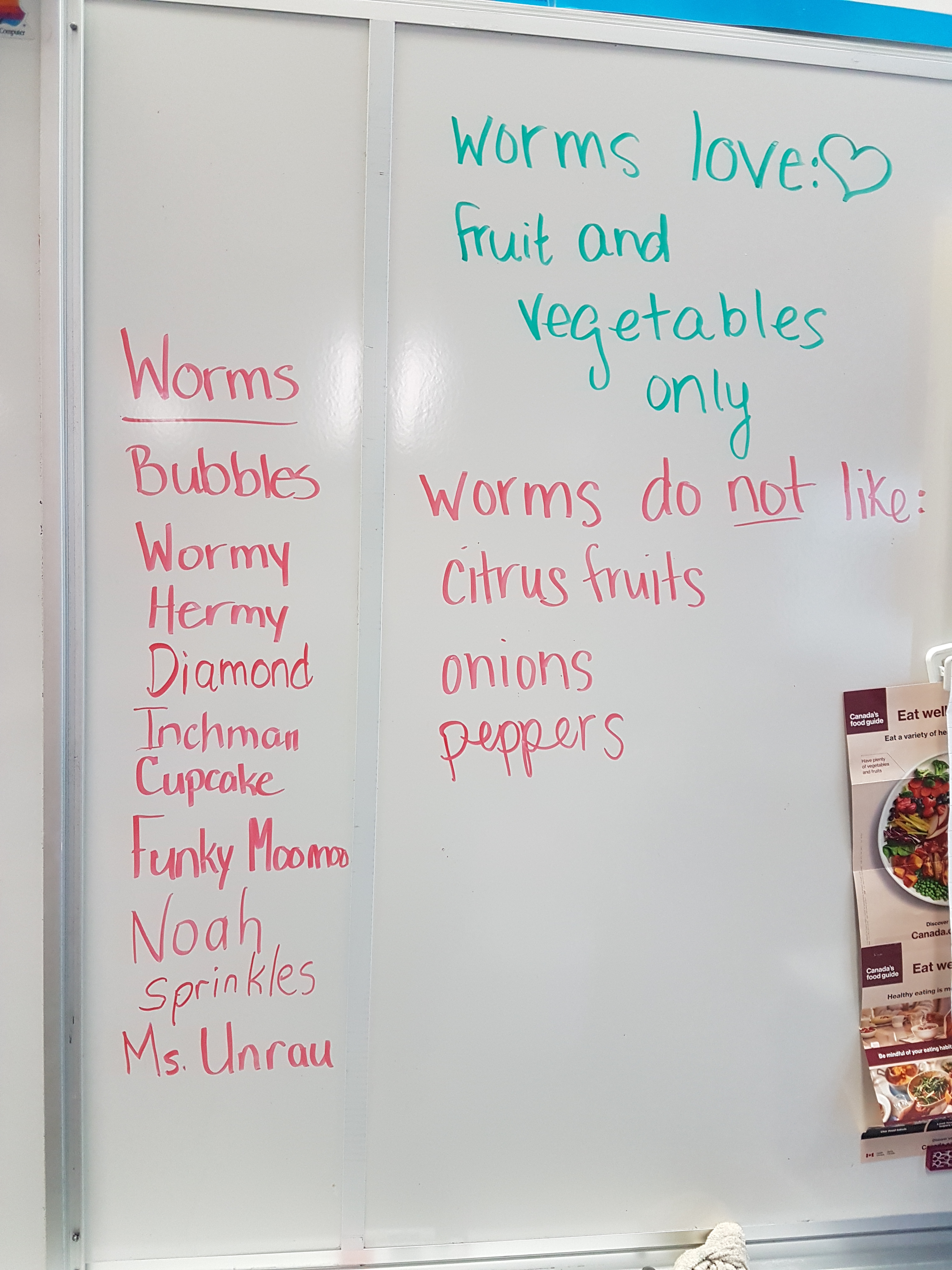
Worm Names

The food that the worms enjoy most are non-citrus fruits and vegetables other than peppers and onions. When they poop, we call it castings. Castings make for incredibly nutrient rich fertilizer for the garden, which makes for healthy crops.

Starting your own worm bin for vermicomposting requires very few materials and is simple to do. For this small classroom bin we used:

. A small opaque Rubbermaid bin

. Shredded brown egg cartons and toilet paper rolls (dampened)

. Ground egg shells

. Some prepared compost (or natural soil)

. Red wrigglers

Consumerism

As a developed country that has collectively made countless environmental mistakes, we all know that we should be cutting out single use plastics, producing less garbage, and consuming and buying less.  

For many of us, the idea of creating less waste sits there in the back of our minds but doesn’t manifest as daily action. 

The reality is, with a little bit of research, some education and a few small changes, we can significantly reduce the waste that we leave behind on our planet.  

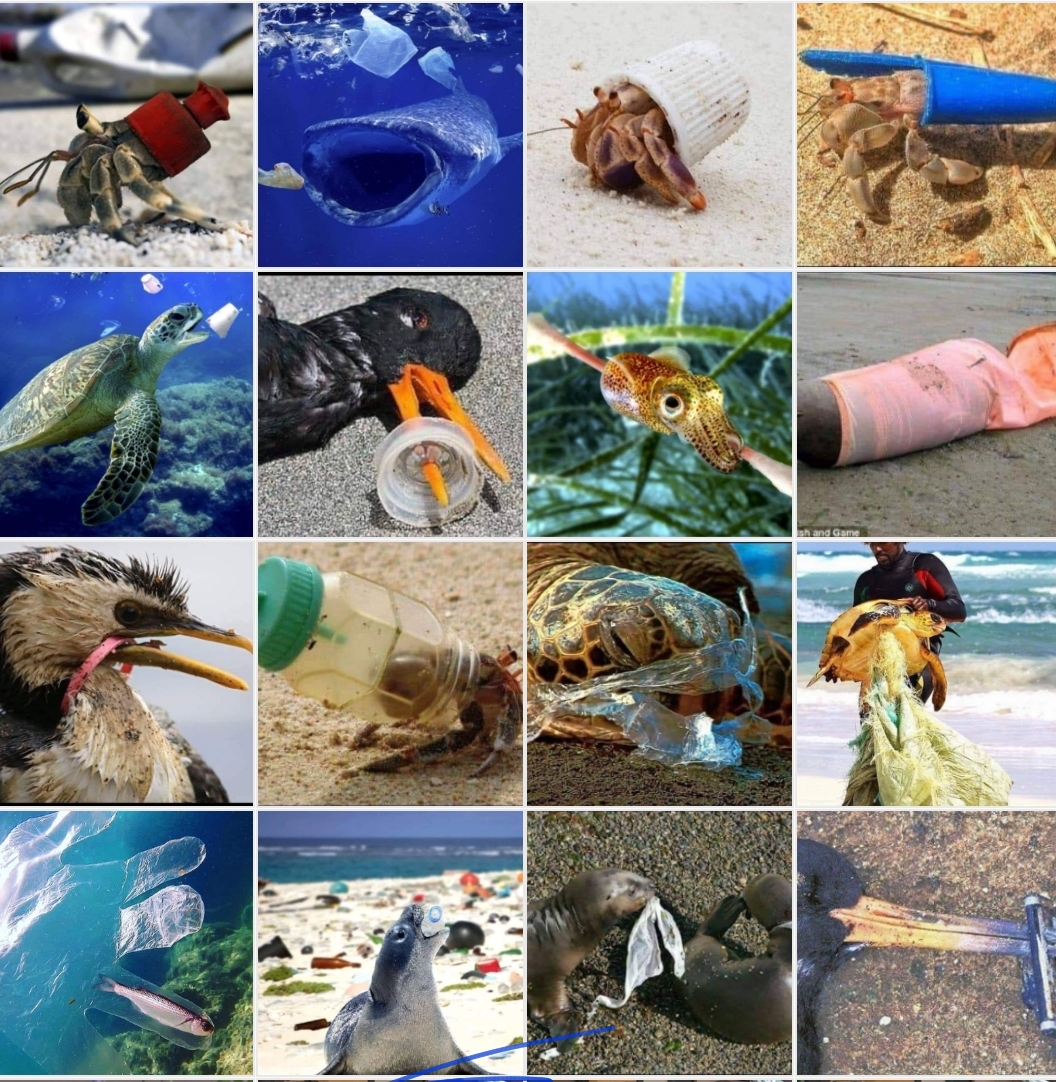
The inaction of human beings is threatening the lives of all other creatures that we share the planet with. Marine animals are washing up dead with stomachs full of plastic, others are growing disformed while encased in plastics and birds are building nests out of our waste, unknowingly threatening their young.  

A collection of images shared by Facebook Page ‘Stop Plastic Pollution.’

Its important to look at the big picture while doing the little things.

Our families tips when it comes to consumerism:

  1. Prep before heading to the grocery store! Don’t forget the reusable bins or bags at home. We’ve started storing extra bags in our car so that we aren’t kicking ourselves when we arrive at the store. We purchased three green bins from the Superstore for around $7.00 each, and we’ve begun to use them as ‘sorting the recycling bins.’ One green bin holds paper and cardboard, the second plastics and tin, and the third, soft plastics. This way we are also forced to take our recycling out each time we go grocery shopping. Purchasing reusable produce bags will also reduce the amount of plastic waste that you bring home. If we are buying less than 4 of any produce item we put them in our bin loose, but for anymore than that, and for the sake of organization, reusable produce bags are wonderful… and washable! When it’s not fresh food that you’re buying, opt for as little packaging as possible.
Reusable produce bags come in a wide variety of styles, sizes and materials. There is something for every price point.

2. Make savvy choices when doing simple things – like eating out! As a busy family who hustles from sun up until sun down, between a University schedule, lessons, sports, meetings and the daily grind… some days there just isn’t enough time for me to tack on a healthy home cooked supper (ugh, Tuesdays. It’s Tuesdays)

We used to hit McDonalds, but the amount of waste we drove away with from one McDonalds meal was mind blowing! Each and every item is individually wrapped in packaging that leaves me questioning how to sort it at the end of the meal.

When I started this project, recognizing full well that I was likely going to buy take out every Tuesday night between extra curricular drop offs and pick ups, I decided I would vary my choices (between the fast food joints that I can stomach). Our second option was A&W… and although the price point is high, it’s now our number one option.

Not only does it taste better than McDonalds but each and every item was wrapped or packaged in compostable materials! After a quick Google search I realized that A&W has an entire page on their website that details what they are doing to reduce their ecological footprint. Their actions for change include involving a growing number of sustainable food practices, compostable and recyclable packaging, low energy appliances and more…

All compostable wrappers

After we finished eating, I was able to compost everything other than the couple stickers that had been stuck onto the packaging, and the “take out” ketchup packets. My kids even enjoyed the paper straws.

3. Buy LESS! We have been making every effort to avoid buying anything NEW! We try to make due with what we already have and if we need something we search high and low for a second hand option first.

Whitehorse has a thrift store again! Check it out. Most Cities and towns South of the Yukon are home to multiple thrift stores. We are members of all of the local buy/sell/trade Facebook pages and will often post online asking if anyone is looking to get rid of/sell the particular item that we are in need of. Not only does buying second hand help the environment by lessoning demand for new product, it also helps us to save money!

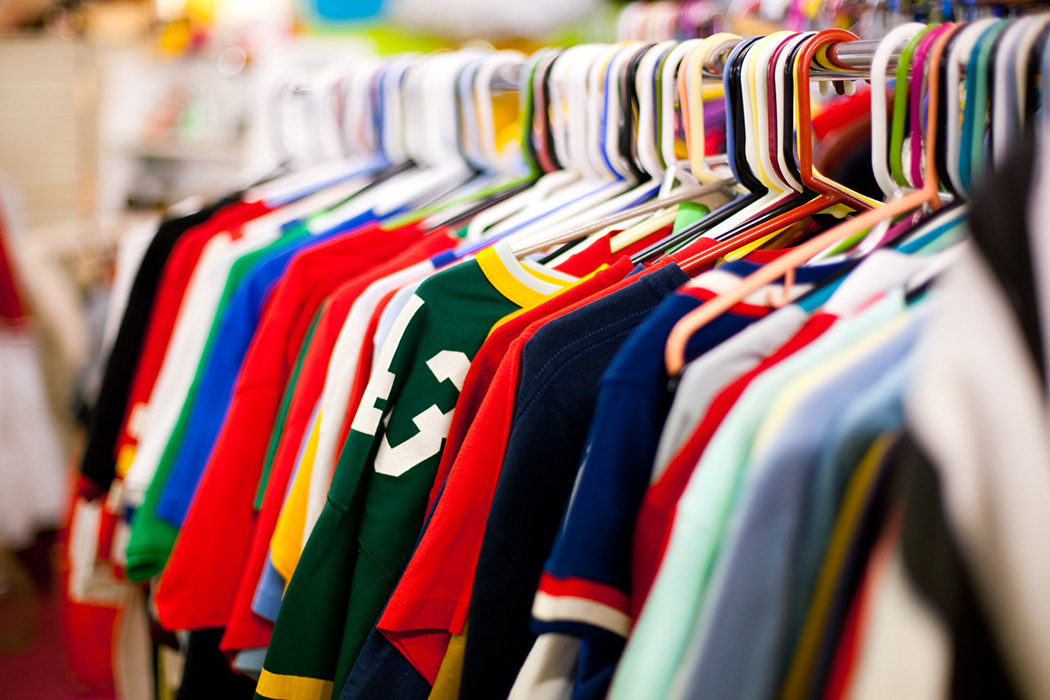
Clothing rack at a second hand store.

For those of you who enjoy the convenience of online shopping, (though the packaging/shipping process still stings) you can even thrift shop online! Try a quick Google search to find an online thrift retailer that is based close to your home town in order to cut down on travel for your items.

Making small changes isn’t hard and our family wants to encourage you and yours to think twice about your daily choices and their long-term environmental impact.

Environmental Facebook Poll

I thought it might serve as a reminder to fellow digital citizens, and may also be interesting to see what other families are doing to reduce their environmental impact.

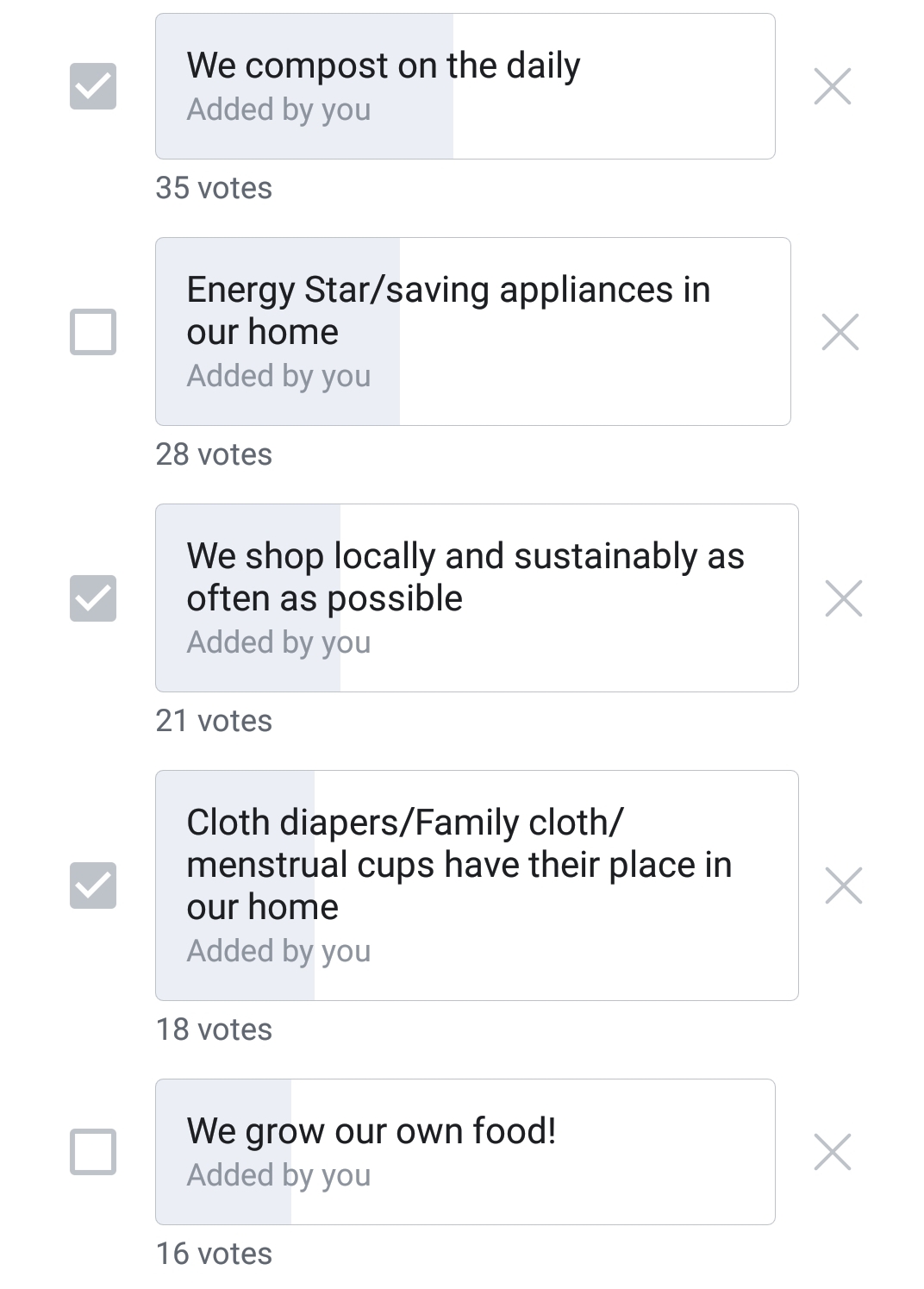
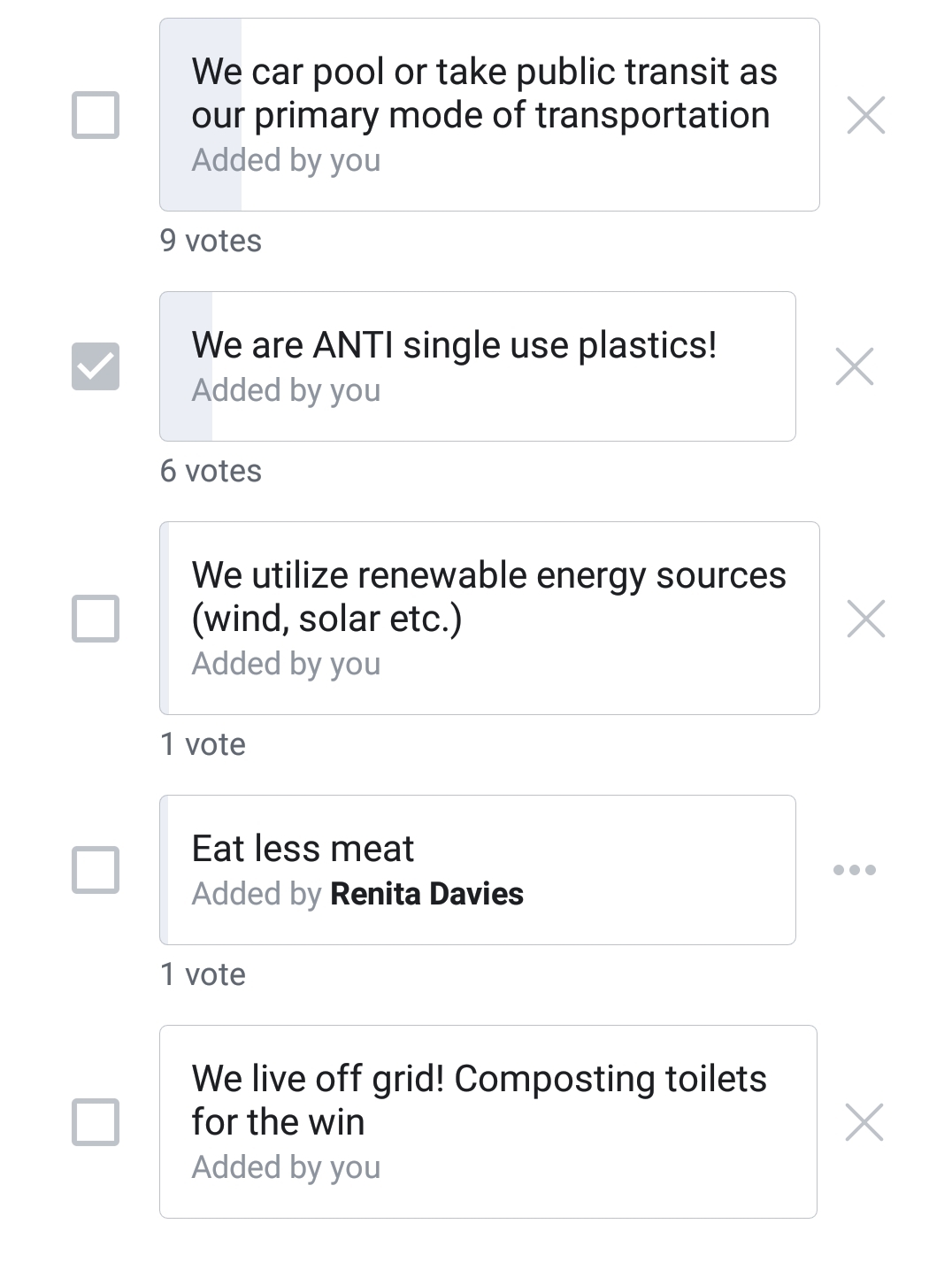
I posted on a popular, public, Canadian parenting page on Facebook in hopes that some people would respond to my poll. Here are the voting results:

It appears that those who live off grid also, for the most part, are living off of the internet. I was pleased to see how many people are taking part in second hand shopping.. and like me, are at least trying to remember their reusable shopping bags…

Cleaning Up Our Act – Reducing Waste through Composting

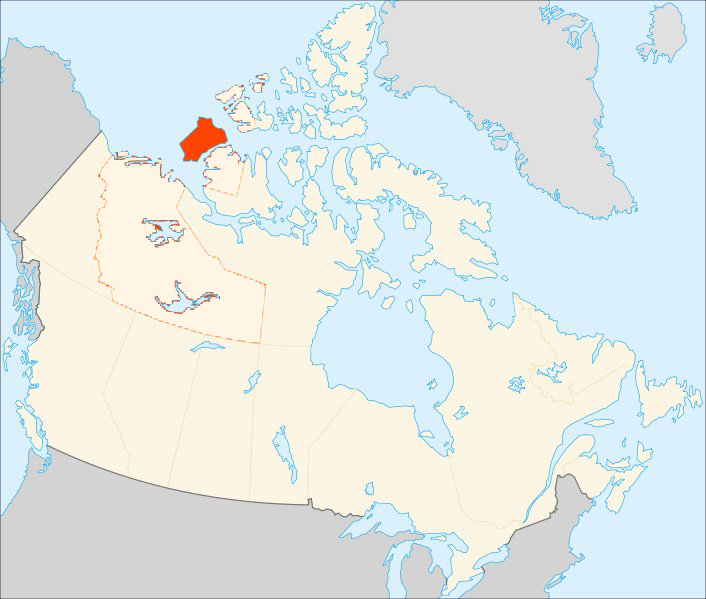
Before moving to the Yukon, my children were being raised at the top of the World, on Banks Island, at the Northern end of the Northwest Territories.

Banks Island is home to the Worlds largest population of Muskox and a healthy number of Polar Bears, Caribou and other wildlife. The land is vast, open, unforgiving and breathtaking.

The environmental systems on Banks Island, in the Hamlet of Sachs Harbour (Ikaahuk) are basic. The only access to the Island is by thrice weekly airplane visits (not the type of plane that could provide assistance in the face of environmental challenge) and a once annual visit by barge – which facilitates the transport of SOME recyclables.

The lack of environmental education in the North is a problem that threatens the pristine beauty of our lands.

Most recyclables and compostables find their final resting place within the fencing of the Hamlets dump. The sight of this dump was something that visibly disturbed my children each time we visited and it sparked a desire to become educated and see change.

When I was offered the position of running the local Greenhouse, I travelled to Inuvik for an internship where I was first introduced on a more hands-on scale to composting and even vermicomposting.

It took me a while to get back into the swing of things during a Yukon winter. We only have garbage and recycling bins outside of our apartment, and the recycling receptacles only allow for paper products and plastic/tin.

My kids were coming home from school with half eaten lunches and my trash bin was filling up way too quickly! All I could think about was the Ontario Science Centre where I had been as a child, and their exhibit on Green House Gasses.

It was time we started composting and with very little foot work, I discovered that we could dump our compost into the organics bin on the other side of the parking lot where we live.

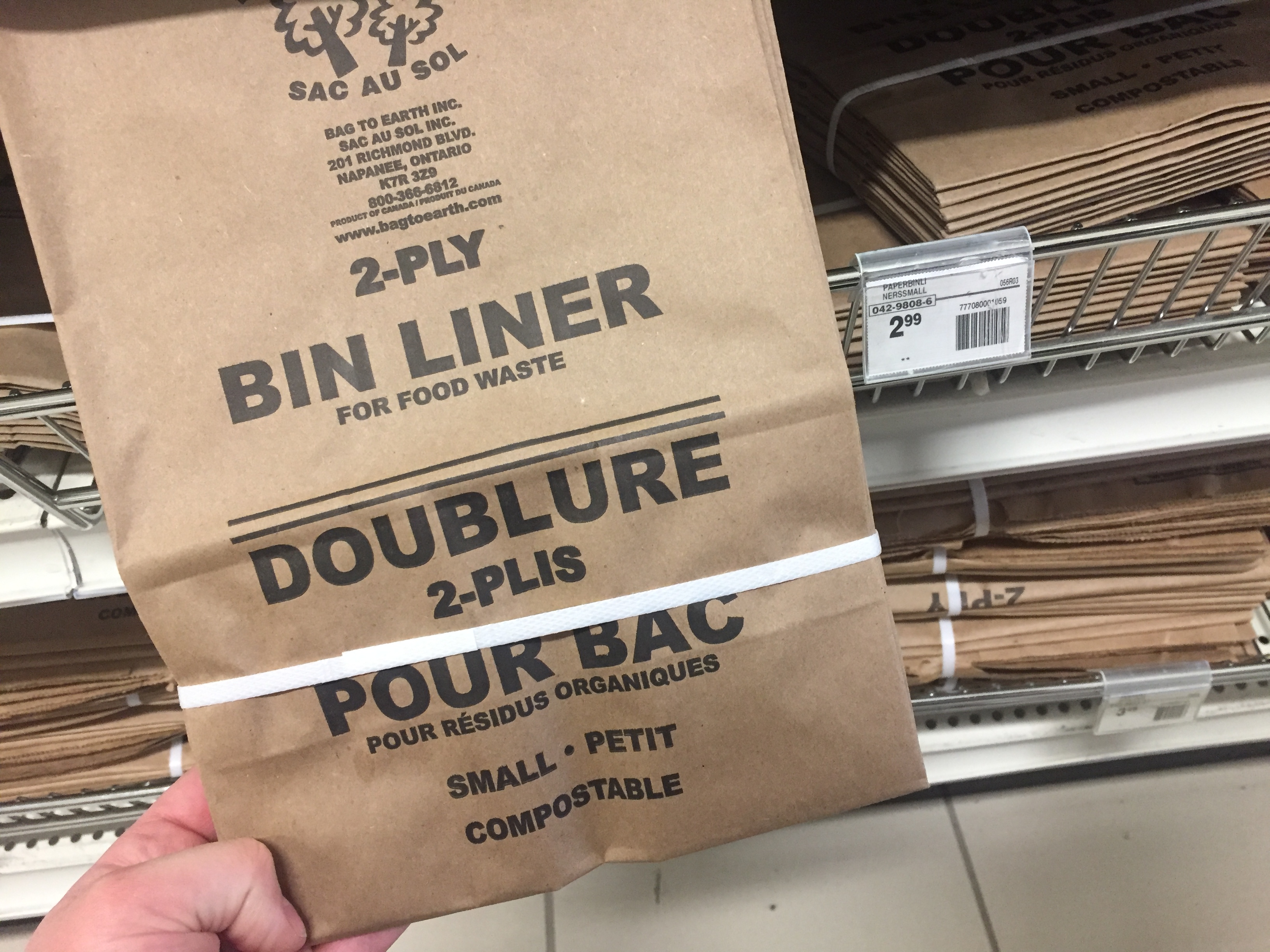
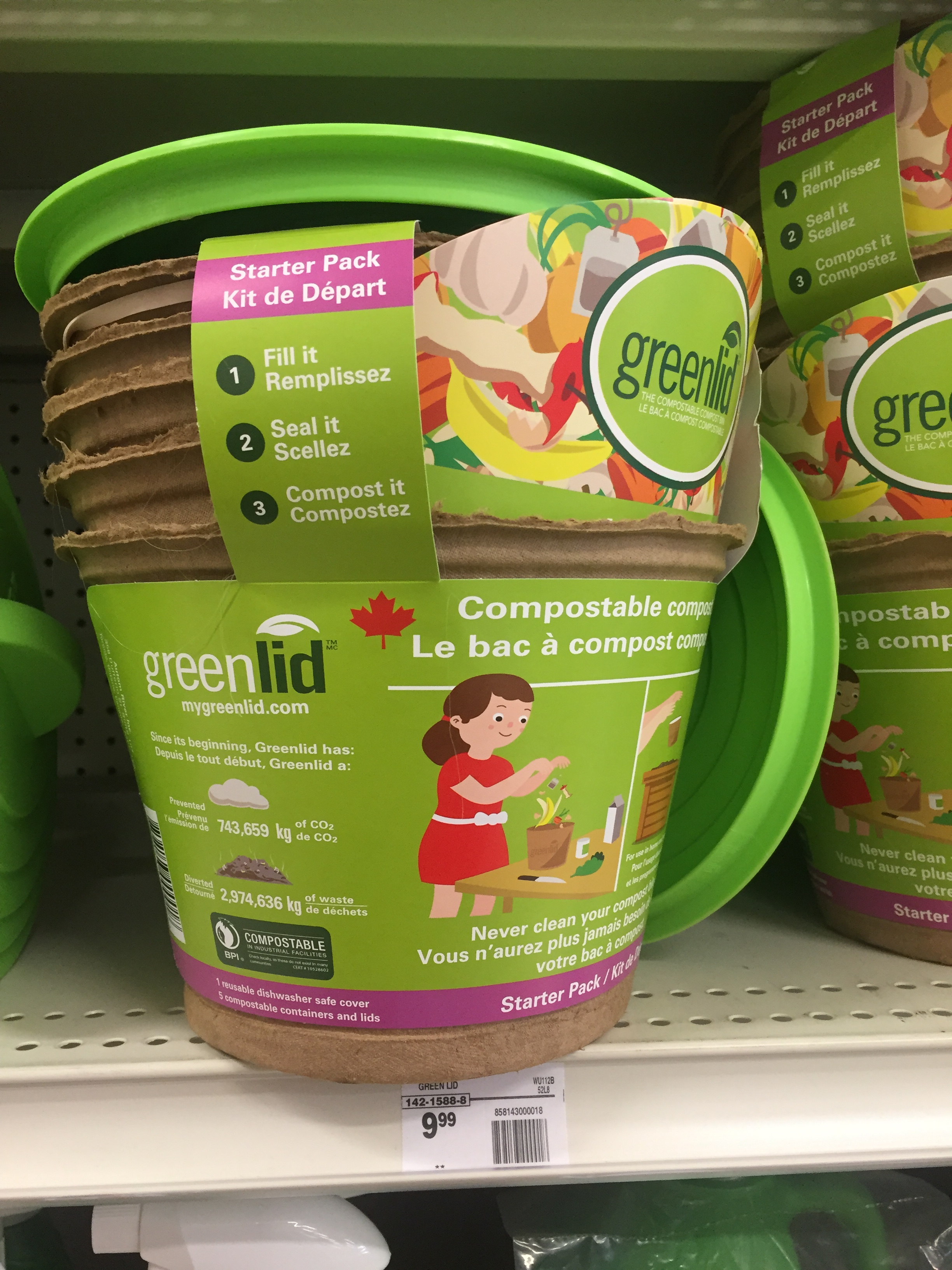
We took a trip down to Canadian Tire, which is a great place in Whitehorse to find all of the basic necessities to begin composting. I considered buying a plastic countertop bin, but knew that if I wanted to be successful, I’d also have to be realistic. If I bought the plastic bin, id end up needing to wash it out, and while it would sit soaking on my counter, we would be throwing food scraps into the garbage. Counter productive. I weighed my options.

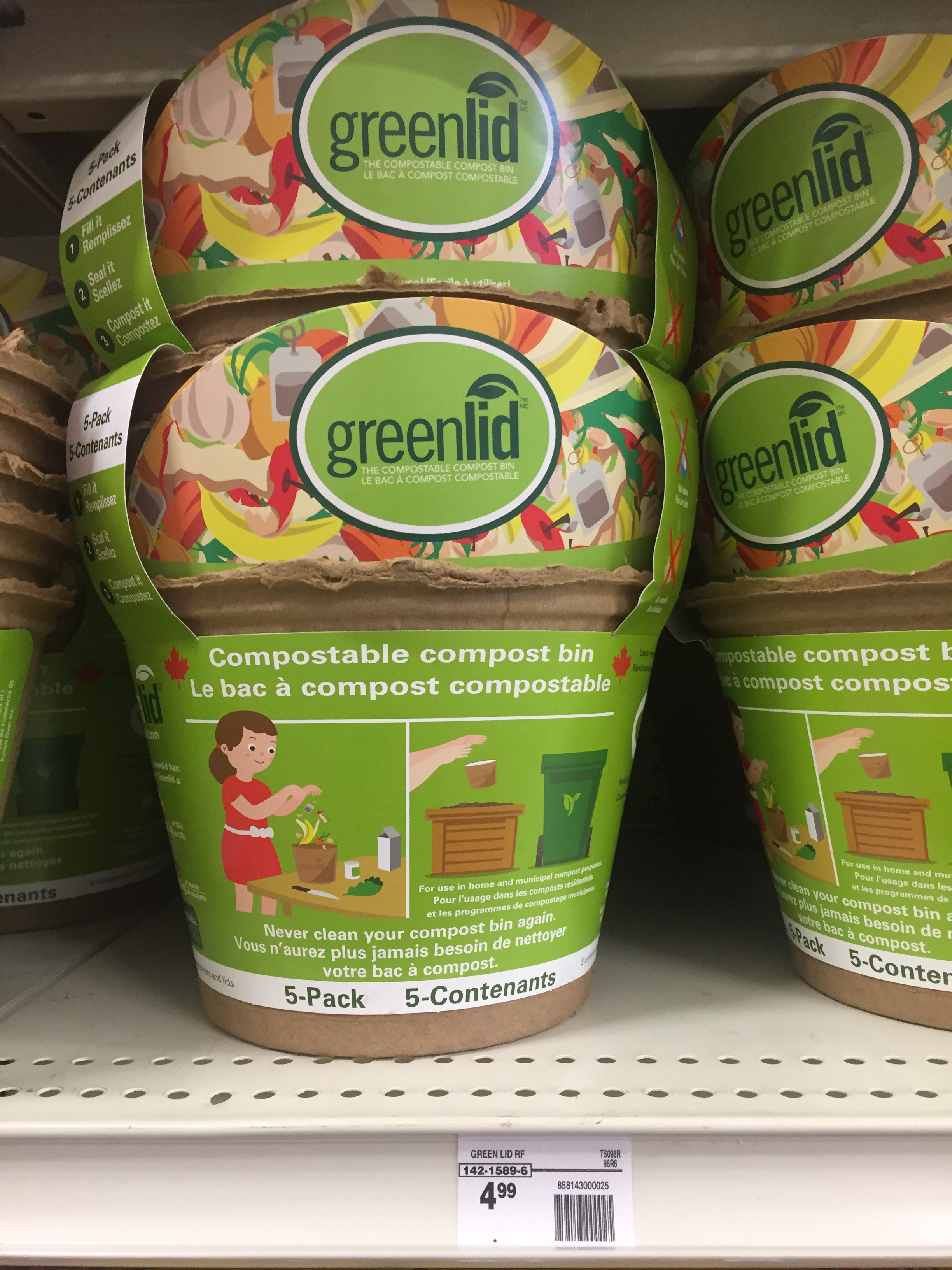
To make composting as simple and as doable for a busy family whose mother is a full time University student, we opted for the $9.99 greenlid starter pack, and have since been purchasing $4.99 5-packs. One five pack of countertop compostable bins last us just over a week and cut our garbage production down by at least a quarter.

Between recycling and composting we are now producing less than half of the garbage we were when we decided to make a conscious switch.

The City of Whitehorse has a great and informative website that lists all of the items that CAN go into your compost bin.

what is compostable?

For the quick answer whether something belongs in your Green Cart, you can use the convenient What Goes Where app, but here’s a bit more info…

Technically speaking if it was living it’s compostable, but there are some exceptions. Compost collection services accept:

  • food including meat, fish, dairy products and shellfish (including the shells) – raw or cooked;
  • garden and yard waste;
  • food soiled paper (for example, that grease stained pizza box or muffin bag);
  • human and pet hair;
  • sawdust and wood shaving;
  • coffee grounds & filters;
  • loose tea & fiber tea bags;
  • eggshells;
  • and more.
    Please do not place pet waste (feces, bedding or litter) into the compost bin.
    The City makes a high grade compost for your edible garden and pet waste can contain bacteria and parasites that may be harmful to human health.

The City has some great information on their website for others who are trying to get into the swing of making environmentally friendly changes!

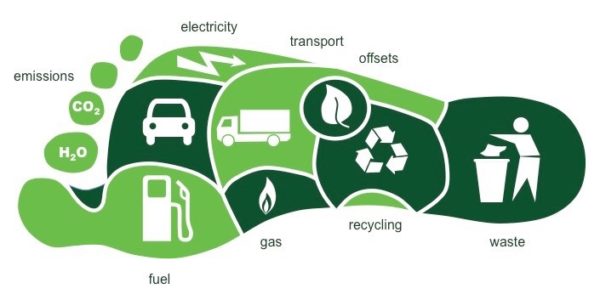
Calculating Your Ecological Foot Print

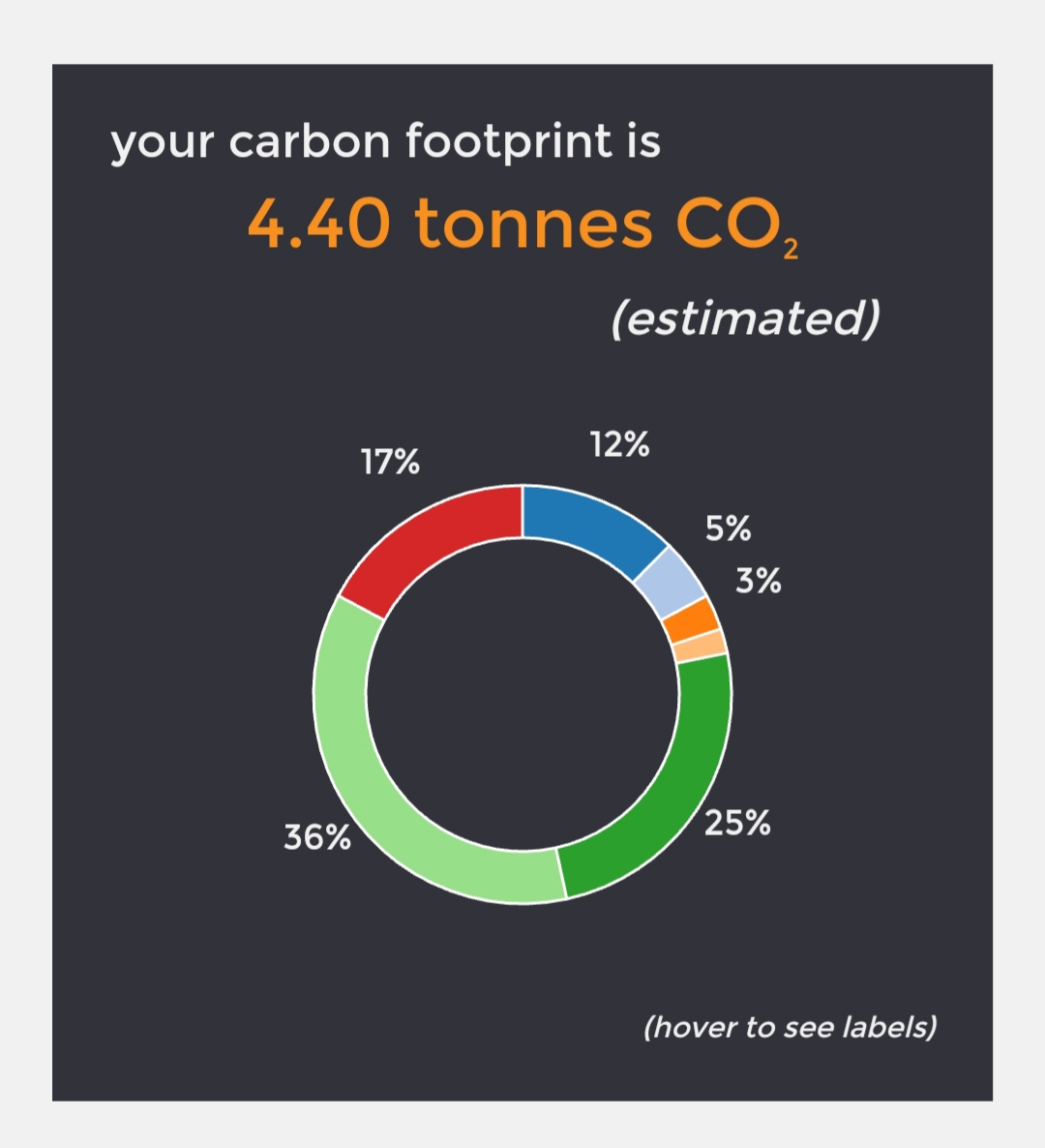
I figured a good place to start when determining our current impact on the Earth would be with an ecological foot print calculator. First we tested out a calculator at ecologicalfootprint.com which told us that if everyone lived like us, we would need 2.7 planets to support global consumption! Holy Smokes.

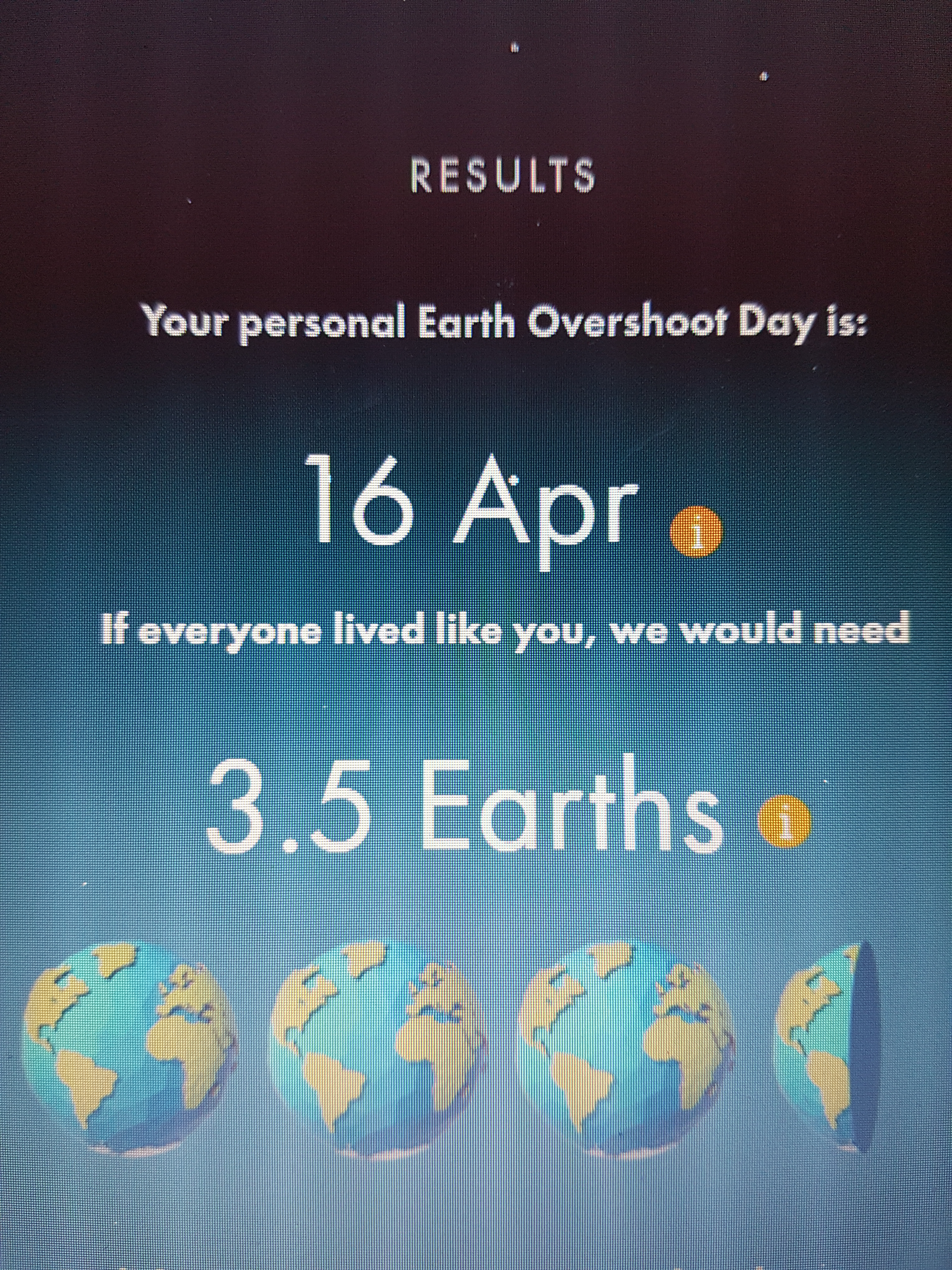
I wanted to find a calculator that went a little more in depth.. surely we couldn’t have THAT much of a negative impact on our Mother Earth. I stumbled upon The Global Footprint Network over at footprintcalculator.org, and what I found was a beautiful website, with the option to input specific information about our lifestyle. I found myself adding up the kilometres it takes me to drop off and pick up my toddler from daycare… and the ones it takes me to drive my older ones to school when the chaos of the mornings cause us to miss the school bus. I even inputted the fuel economy for my SUV. I thought surely, this calculator will give me a more accurate result, and I’m sure it did…

Only now we knew that if everyone lived the way we do (and the way our society does), we would need 3.5 Earths to sustain the collective lifestyle.

I had often heard of overpopulation, and as a youth I was determined to grow up to be a parent who would ensure her families presence was helping and not hindering global sustainability and the health of our beautiful planet.

At this point, I realized that we have a long way to go!